
In business strategy, learning should never be a zero-sum game. Strategic insights do not carry a single flag, nor are they the exclusive domain of any single region.
Over the years, Chiqui and I have had the privilege of completing over two dozen executive education courses across some of the finest business schools in the West, including MIT Sloan, Kellogg, Harvard, and Wharton. That grounding in classical management theory and global strategy continues to shape how we view the business world.
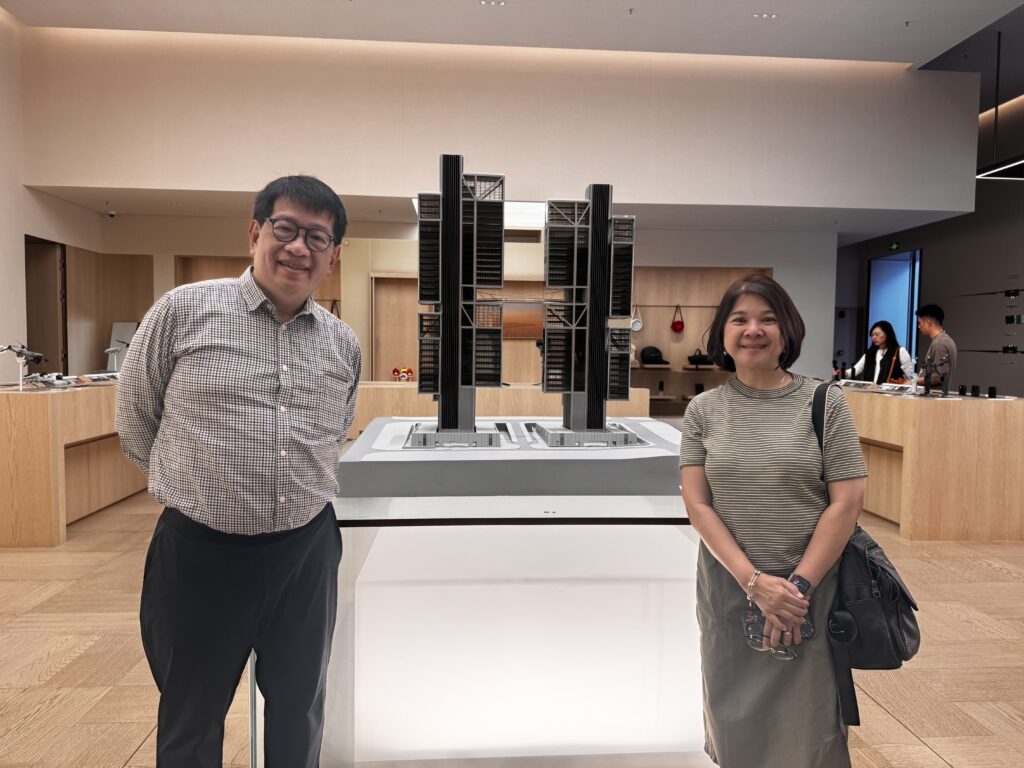
At the same time, returning to Shanghai for a vacation in mid-2026 sparked a fresh curiosity about the rapid commercial shifts happening right in our neighborhood. That trip led to an intensive field study in Shenzhen in October 2026, and next, we are heading to Guangzhou for another self-funded research walkthrough. As always, Chiqui and I travel together as curious observers; combining rigorous field observation with a shared love for exploring local food and culture.
We undertake these study trips entirely self-funded and completely independent. We are not beholden to any government, corporate sponsor, or political agenda. We are neither pro-China nor pro-US; we are unapologetically pro-learning.
The goal of this blog series is simple: to offer business executives, entrepreneurs, and students an objective, field-tested perspective on how brands and business models operate in China today. By dissecting both their operational breakthroughs and their structural failure modes, we aim to extract universal lessons that can be applied anywhere in the world.
This series is just one part of a broader global lens. Moving forward, I will continue to write diagnostic case studies on emerging models and enterprises from other countries across Asia, Europe, and North America. Excellent strategy can come from anywhere, and our job as leaders is simply to recognize it, test its logic, and learn.
Here is a curated list of 9 articles with their links that offer deep strategic perspectives on business models,market dynamics, and execution:
1. The Shenzhen Blueprint: Taking the Strategy Logic Chain Beyond the Corporation
- An exploration of how municipal policy, supplier density, and total system productivity transformed Shenzhen into an economic powerhouse.
2. What Shenzhen’s Drone Network Teaches Us About Last-Mile Strategy
- A breakdown of shifting fulfillment from 2D street grids to 3D low-altitude airspace, balancing hardware limits with supervisory leverage.
3. The Cirque du Soleil Effect: How Robotaxis Re-Architect Urban Mobility
- An analysis of how autonomous fleets eliminate variable labor OpEx to create a whole new category—The Private Mobile Space.
4. The Pigeon That Conquered Shenzhen: How Da Ge Fan Won Without Being First or Original
- A retail F&B case study proving why being first-to-succeed in category specialization beats being first-to-market.
5. Scale Does Not Fix Bad Logic; It Multiplies It
- A diagnostic on the rise and fall of standalone bike-sharing apps and their transition into super-app ecosystems.
6. Pop Mart: Building a Global Emotional Brand Engine
- A diagnostic on how Pop Mart altered the basis of retail competition by shifting from functional products to an emotional, experience-driven collection loop.
7. The Friction Advantage: Lessons in Scale and Innovation for the Philippines
- What Shanghai’s digital operating system and frictionless urban infrastructure reveal about scaling commercial innovations.
8. Q&A with P&G China VP Lester Estrada on Digital Trends
- An executive interview exploring digital transformation, consumer shifts, and brand strategy across Asian markets.
9. China’s Global Strategy: Are They Marketing Themselves Right?
- An analysis of global brand perception, soft power, and messaging strategies in international expansion.