

The biggest strategic risk isn’t having no marketing plan. It’s executing a polished plan built on untested assumptions.
During annual planning, executive teams routinely default to copy-pasting the past: last year’s sales become the new baseline, legacy customers retain top priority, and yesterday’s winning products receive automatic budget renewals.
Except the market refuses to remain frozen in time. Consumers shift spending habits, input costs erode margins, and competitors alter their business models.
Before you approve your 2027 budget, stress-test your strategy against four critical diagnostic blind spots:
1. Growth Target Without a Causal Source
Declining volume cannot be solved by simply writing a higher revenue target on a slide. Are buyers trading down, delaying purchases, or demanding heavy discounts? If you do not isolate the true root cause, your team will panic-buy surface solutions—more promos, more ad spend, and more promotional noise—without fixing the structural constraint.
2. Funding Yesterday’s Cash Cows Instead of Tomorrow’s Growth
Historical revenue is not a guarantee of future economic yield. A high-volume product may have zero headroom left to grow, while a legacy client may demand margin-destroying discounts. Planning requires hard allocation choices: If your budget were cut by 20% tomorrow, which specific initiatives would you terminate immediately?
3. Differentiating on Features Customers Do Not Value
A positioning strategy crafted in a boardroom rarely survives market scrutiny if it relies on what a company loves saying about itself. Differentiation only creates economic value if it solves a genuine customer problem better than available substitutes.
4. Executing Without Clear Pivot Triggers
Failing to adapt to changing market signals is the most expensive mistake in corporate leadership. A resilient plan explicitly defines its load-bearing assumptions beforehand: What specific market signal or economic drop will force an immediate pause in capital expenditure?
Fact vs. Assumption: The Audit Discipline
Unexamined assumptions kill profitability long before campaigns go live:
- Fact: Sales dropped 8% this quarter.
- Interpretation: Consumers are becoming price-sensitive.
- Assumption: Buying volume will normalize next year.
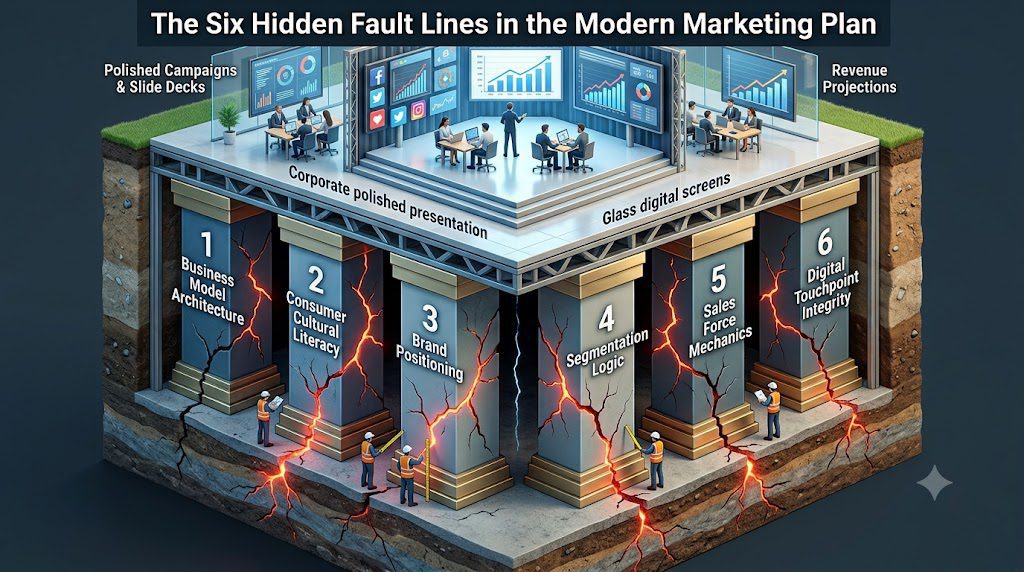
Strategic planning is not about predicting the future; it is about establishing clarity on your core logic and managing capital allocation risk. You must run your strategy through the PILA Reasoning Stack (Problem, Insight, Logic Chain, Assumptions) across your entire business model—from consumer culture to digital touchpoints and sales force alignment.
Don’t commit capital to a guess. Don’t plan yet. Audit first.
***
Josiah Go is the Chair and Chief Innovation Strategist of Mansmith and Fielders Inc.
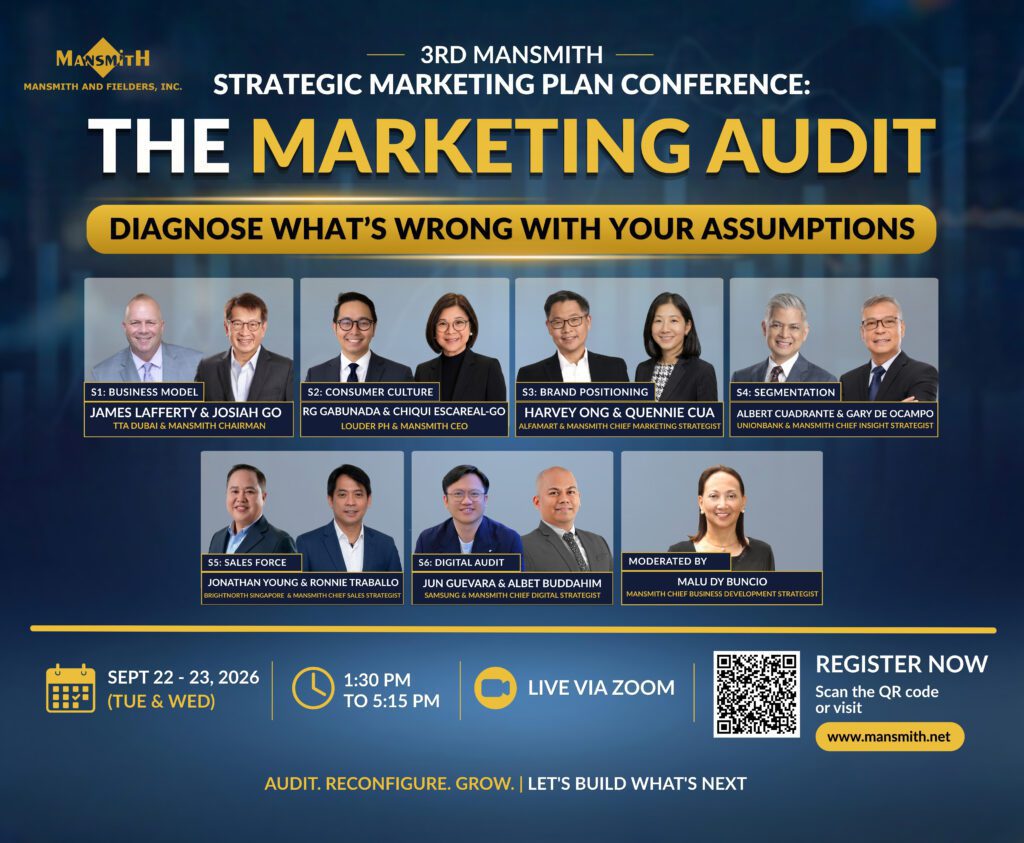
Eliminate strategic guesswork before finalizing your 2027 budget. Apply this exact diagnostic discipline at the 3rd Strategic Marketing Plan Conference: The Marketing Audit, happening live via Zoom on September 22–23, 2026.
Reserve your executive seat today. Email info@mansmith.net for registration details.