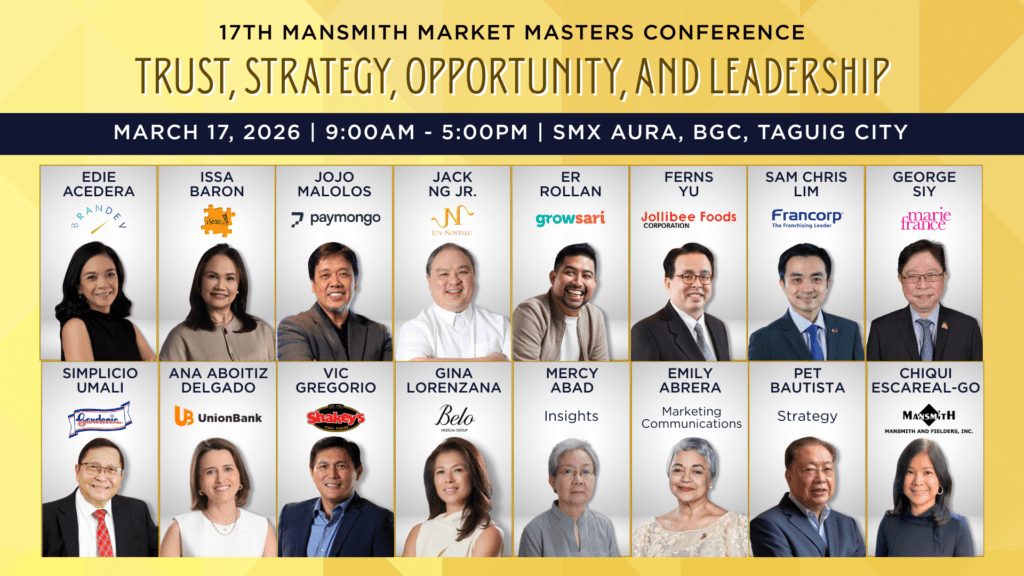


It’s tempting in business to chase the next campaign, launch a discount, or offer a flash promotion. But often, these are solving symptoms, not solutions, like painting over a crack while ignoring the foundation. In a low-trust economy like the Philippines, this approach is risky. Customers are skeptical. Partners are cautious. And trust, once broken, can take years to rebuild.
Trust doesn’t happen by accident. It must be built, proven, and nurtured consistently. Yet many businesses overlook it, assuming familiarity or short-term results are enough.
Interestingly, trust is also what readers are clicking on. In fact, three of my top most-read blogs in 2025 were all about trust, a trend I didn’t expect. Clearly, business leaders and marketers are hungry for guidance on building credibility, earning loyalty, and creating sustainable growth.
Why Trust Gets Overlooked
- Short-term thinking dominates: Sales spikes from promotions or campaigns may inflate revenue temporarily, but they rarely fix the real problem: product gaps, pricing flaws, or operational inefficiencies.
- Recognition isn’t trust: A familiar brand name doesn’t guarantee confidence. Customers want proof that you can deliver consistently, and skepticism is the default.
- Human connection is undervalued: Empathy, humility, and accountability aren’t just soft skills, they are revenue multipliers. Brands that fail to show these qualities feel transactional or opportunistic.
- Skipping feedback loops: Acting on assumptions instead of real customer insight slowly erodes trust. Listening, validating, and adjusting is essential.
Good Revenue vs. Bad Revenue
Not all revenue is created equal. Good revenue comes from solving real problems, creating value, and earning trust, these sales build credibility and long-term loyalty. Bad revenue, on the other hand, often comes from shortcuts: excessive discounts, flash promotions, or ethically dubious tactics.
Too many sales driven by heavy promotions mask underlying problems instead of solving them. Customers may buy, but they notice the compromise, creating remorse among those who purchased at regular prices, and eroding trust in the brand. Short-term revenue can feel satisfying on a report, but it undermines credibility, weakens customer relationships, and diminishes long-term relevance. In a low-trust economy, where skepticism is high, chasing bad revenue is a dangerous habit. Sustainable growth comes from revenue that solves real problems, earns trust, and compounds value over time.
How a Low-Trust Economy Changes Behavior
In a low-trust market, behavior shifts:
- Decisions take longer: Buyers and partners research, validate, and compare. Impulse purchases are rare.
- Skepticism is default: Every claim, campaign, and offer is questioned. Authenticity is mandatory.
- Proof is king: Reviews, endorsements, trials, and real-world results outweigh flashy promises.
- Relationships matter: Loyalty is earned slowly, but lasts far longer.
- Reputation risk is high: One misstep can undo years of goodwill.
- Consistency and transparency are non-negotiable: Actions must match words at every touchpoint.
- Innovation must be demonstrable: New offerings need immediate proof of value.
This isn’t just theory. According to the 2025 Edelman Trust Barometer, trust in business leaders has fallen globally, highlighting just how fragile credibility can be, even for well-known brands and personalities. In such an environment, shortcuts and flashy promotions are not enough. Solving real problems and proving reliability is the only way to earn confidence.
Lessons from Experienced Leaders
Experience is the fastest shortcut to understanding trust. Leaders who have navigated low-trust markets share clear lessons:
- Values matter: Humility, empathy, and accountability are competitive advantages. they power trust.
- Insights reveal opportunity: Small experiments and customer feedback uncover what buyers truly value, often beyond “quick fixes” like discounts.
- Adapt fast, but with integrity: Agility works only if it doesn’t compromise credibility. Customers forgive change less than inconsistency.
- Protect trust during crises: Reputation management isn’t theoretical, it’s survival. Brands that prioritize trust navigate turbulence better.
- Enduring trust compounds: Consistency, learning from mistakes, and embedding trust into culture creates loyalty that outlasts trends and promotions.
The takeaway? Trust is not a marketing gimmick, and constant discounting is poor marketing. Every transaction in a low-trust market carries a ‘trust tax.’ Earn trust slowly, spend it wisely, and reduce that tax while unlocking long-term growth.
Trust as a Strategic Advantage
In a low-trust economy, trust is a differentiator, revenue driver, and resilience mechanism. Brands that act deliberately enjoy:
- Long-term customer loyalty
- Smoother partnerships
- Faster adoption of new products
- Greater resilience in changing markets
Every promise kept, every transparent interaction, every proof-backed claim adds credibility. Every misstep diminishes it. In markets where skepticism runs high, trust compounds over time, and the payoff is immense.
In an economy of infinite choices and scarce attention, trust is the only currency that appreciates with use. Ignore it, and the next flash sale or promotion is wasted energy. Build it, and the results multiply over years.
Act Intentionally
Promotions are easy. Building trust is hard, but the difference between surviving and thriving in a low-trust market is whether you solve real problems instead of masking symptoms, generate good revenue instead of chasing shortcuts, and learn from experience. Leaders who act deliberately earn loyalty, resilience, and credibility, assets that drive sustainable growth and long-term relevance.
***
Josiah Go, best-selling author and thought leader, together with anthropologist Chiqui Escareal-Go, developed the Trust Flywheel, which is also available for corporate talks.