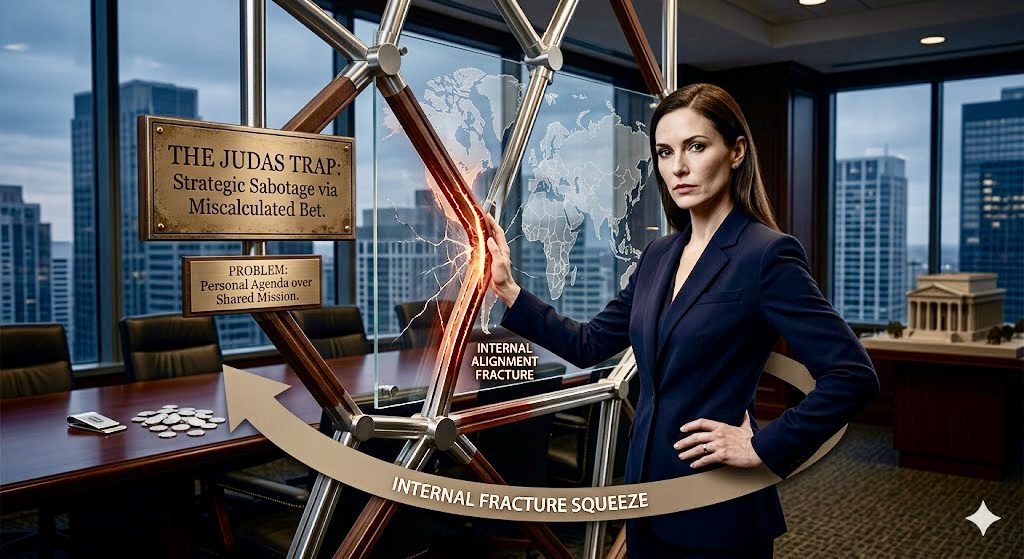


In our first reflection on the Caiaphas Trap, we examined how a leader can become the architect of institutional failure by choosing pragmatism over truth. We saw how the High Priest defined the problem as “saving the structure” rather than “discovering the truth,” leading to a decision that was logically consistent but morally bankrupt.
But the story did not end there. History shows us that when we make a strategic mistake, we are often presented with a second chance to pivot. The tragedy of the leadership that followed was that they chose to correct their first mistake by committing an even greater one. This is the study of Stephen, the ultimate outlier, and the high cost of institutional pride.
The Downward Spiral of the Sunk Cost
In the world of strategy, we often talk about the “Sunk Cost.” This is the psychological trap where we continue to pour resources into a failing project simply because we have already invested so much. We feel that to stop now would be an admission of failure.
When Stephen stood before the supreme council, the leaders were already deep in this trap. To admit that Stephen’s message had merit was to admit that their previous decision to execute Jesus was a catastrophic error. Instead of stopping to reassess, they doubled down.
“But they cried out with a loud voice and stopped their ears and rushed together at him.”(Acts 7:57)
This is a chilling picture of a leadership team in a “closed loop.” When the facts become too painful to hear, the leaders literally stop their ears. In our organizations today, this happens metaphorically when we silence the whistleblower, ignore the dissenting data, or sideline the young manager who points out that our legacy way of doing things is crumbling.
When Logic Turns to Emotion
Stephen did not just argue with the Sanhedrin; he performed an audit of their entire history. He showed them that their problem wasn’t a lack of information, but a pattern of rejecting anyone who tried to drive the market toward a better future.
When a leader’s logic is exposed as faulty, and they lack the humility to pivot, they often retreat into “Position Power.” They stop using evidence and start using force. The council’s reaction, gnashing their teeth and rushing at him, is the ultimate sign of a broken strategy. They weren’t defending the truth; they were defending their egos.
The Unintended Witness: The Saul Factor
Every leadership decision has a second-order effect, a ripple that moves beyond our immediate sight. The council thought that by stoning Stephen, they were finally “finishing the job” and restoring order. They failed to notice the young man standing on the sidelines.
“And the witnesses laid down their garments at the feet of a young man named Saul.” (Acts 7:58)
While the leaders were busy protecting their structure, they were inadvertently planting the seeds for its greatest reconfiguration. Saul, who stood there watching the grace and conviction of Stephen, would eventually become Paul, the man who would take the very disruption they feared and turn it into a global movement.
Lessons for the Modern Leader
1. Beware the “Correction” that Escalates the Error
If your first decision was wrong, do not attempt to “fix” it by silencing the person who noticed. Admitting a mistake is a trade-off that leads to a better future. Doubling down to save face only ensures a more spectacular collapse later.
2. Listen to the Outlier
Stephen was an outlier who saw the “Big Picture” that the council missed. In your organization, the people who challenge your assumptions are often your greatest assets. If your leadership style causes everyone to “stop their ears” to dissenting views, you are flying blind.
3. Watch the Sidelines
Your treatment of dissenters is being watched by the “Pauls” in your company, the high-potential talent of the next generation. If they see you sacrifice truth for the sake of your pride, they won’t stay to help you build. They will take their energy elsewhere.
The Final Diagnostic
Caiaphas and his council kept their titles, and for a short while longer, they kept their Temple. But by choosing pride over a pivot, they lost their influence on history.
The lesson for us is sobering: The moment you believe the institution is more important than the truth it was built to serve, you have already lost.