

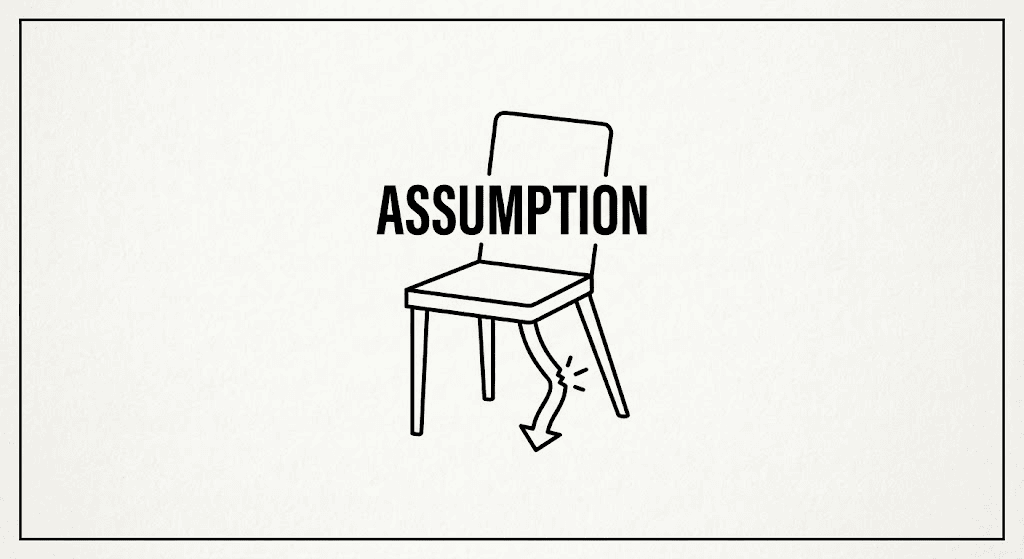
Every strategy rests on assumptions. The problem is that once a strategy is approved, those assumptions can disappear from view.
Imagine the Philippine government announces that every Filipino who reaches 101 will receive ₱1 million, with another ₱1 million for every birthday thereafter.
At first glance, this may seem manageable. But how many Filipinos will reach 101? How long will they live beyond that age? And what happens to fiscal exposure if longevity improves faster than expected?
This is not entirely hypothetical. Proposals have been filed in Congress to provide ₱1 million to Filipinos reaching 101, with additional benefits for succeeding birthdays. In 2023, the House approved a proposal for a ₱1 million benefit at age 101, although it did not become law in that form.
Current law provides ₱100,000 to Filipinos who reach 100. Republic Act No. 11982, enacted in 2024, also provides ₱10,000 cash gifts at ages 80, 85, 90 and 95. In 2024, 1,750 centenarians received the ₱100,000 benefit.
The bigger leadership question is not simply how accurately we forecast the number of centenarians. It is how we govern the assumptions behind long-term commitments.
The same question applies in business when leaders make long-term bets based on assumptions about customers, growth, costs, technology, markets or competition.
When an Assumption Stops Being an Assumption
A forecast can be wrong without management having failed.
We forecast 2,000 beneficiaries; 3,500 actually qualify. That is forecast error.
But suppose the number rises to 3,500, nobody is assigned to monitor it, the board is not alerted, the budget remains unchanged, and the policy continues without reassessment.
That is governance failure.
The dangerous assumption is therefore not necessarily the wrong one. It is the assumption that stops being treated as an assumption.
Once an assumption becomes embedded in a budget, strategy, investment or public policy, people often stop questioning it. The forecast becomes the plan. The plan becomes the commitment. That is when an assumption can become a liability.
From PILA to Assumption Governance
To help leaders examine the reasoning behind a strategy before capital or policy is committed, we developed the PILA Reasoning Stack: Problem, Insight, Logic and Assumptions. PILA asks:
- Problem: What problem are we trying to solve?
- Insight: What have we learned about the situation?
- Logic: Why should the proposed intervention work?
- Assumptions: What must be true for that logic to remain valid?
For a policy supporting people in extreme old age, assumptions might include:
- The qualifying population remains relatively small and predictable.
- Survival beyond the qualifying age remains within the fiscal model’s range.
- Government revenues and social-sector allocations can absorb the resulting obligation.
PILA identifies the assumptions. The 7A’s govern them. The 4T’s give the board visibility and control.
The 7A’s of Assumption Governance
Before committing capital or approving a long-term policy, leaders should ask seven questions:
- Accountability: Who has single-point accountability for this assumption?
- Ascertain: What evidence supports it?
- Adversarial Challenge: Who is incentivized to try to break it?
- Analysis: What happens to cash flow, returns or outcomes if it is wrong by 20% or 50%?
- Audit: How often should it be revalidated against actual experience?
- Alert: What threshold requires a strategic reassessment?
- Action: What happens when the assumption proves wrong, before the liability compounds?
The sequence is:
Identify → Rank → Own → Challenge → Stress-Test → Monitor → Trigger → Act
The objective is not to eliminate assumptions. It is to make consequential assumptions visible, testable and actionable before they become expensive.
Stress-Testing Longevity
Consider a purely illustrative policy based on 2,000 beneficiaries annually receiving ₱1 million each. The baseline annual cost would be ₱2 billion.
Now suppose the beneficiary population rises to 3,500. The annual payout becomes ₱3.5 billion, a 75% increase.
Then consider longevity. If that cohort receives ₱1 million for an average of 2.5 additional birthdays, cumulative payouts associated with the cohort would be:
3,500 × ₱1 million × 2.5 = ₱8.75 billion
This does not mean ₱8.75 billion automatically becomes the government’s annual budget requirement. It illustrates how cumulative exposure can diverge sharply from an initial annual estimate when both beneficiary numbers and duration exceed expectations.
That is why stress-testing matters.
A successful public-health outcome, people living longer, can create financial consequences that an original policy model did not anticipate.
The governance question is not whether the original forecast was wrong. It is whether someone was watching the assumption, whether a threshold had been defined, and whether action was triggered when reality changed.
Lessons Beyond Public Policy
The same dynamic appears in business.
In the Philippine pre-need sector, long-term promises depended on assumptions about investment returns, obligations and future claims. As economic and industry conditions deteriorated, trust-fund deficits accumulated. By June 2001, the IMF reported an aggregate trust-fund deficit of about ₱1.7 billion among 46 reporting pre-need companies, with 33 of 82 trust funds in deficit.
The lesson is not simply that forecasts can be wrong. Long-term promises become dangerous when the assumptions supporting them are not continuously tested against reality.
A more recent example is the controversy surrounding the transfer of ₱89.9 billion in PhilHealth reserves to the national government. The episode exposed competing assumptions about what constituted “idle” reserves, the adequacy of health-insurance funds and the government’s authority to reallocate them. The Supreme Court subsequently struck down the legal basis for the transfer and ordered the return of ₱60 billion already transferred while permanently prohibiting the transfer of the remaining ₱29.9 billion.
The broader lesson is that assumptions about liquidity, reserves and future obligations cannot remain implicit when large, long-term commitments are involved.
The 4T Board Test
Management needs a process for governing assumptions. Boards need a simple way to determine whether that process is working. The 4T’s of Assumption Governance are:
Transparent — Critical assumptions are visible to decision-makers.
Tracked — They are monitored against actual experience.
Tested — They are challenged and stress-tested.
Triggered — Thresholds are linked to mandatory reassessment or action.
For a board chair, this can reduce a complex strategy discussion to four questions:
- What must be true for this strategy to work?
- Which assumptions could materially change our decision?
- Who is watching them?
- What is the trigger, and what will we do?
That is governance in practical form.
What Leaders Should Do
Board Chairs: Require an Assumption Register for major investments, acquisitions, technology, and strategic plans. Focus discussion on the few assumptions that could materially change the decision.
CEOs and Business Owners: Identify the one to three assumptions on which the strategy most heavily depends. Find the fastest and cheapest way to test them.
CTOs and Innovators: Treat technology investments as hypotheses. Define leading indicators that reveal early whether adoption, cost, productivity, security or implementation assumptions are holding.
Policymakers: Require major long-term commitments to disclose and stress-test the assumptions underlying their projected fiscal exposure.
Business Students: Understand that strategy is not simply about choosing the right answer. It is about knowing what must be true for the answer to remain right, and who is responsible for noticing when it no longer is.
Every long-term strategy is ultimately a bet on the future. Good governance is not predicting the future perfectly. It is knowing which assumptions the future is allowed to invalidate, who will notice, and what will happen next.
The greatest risk is not being wrong.
It is being wrong without knowing it.
***
About the Authors
Josiah Go is a bestselling author, award-winning business educator, and independent director of a universal bank. Chiqui Escareal-Go is a marketing anthropologist, CEO of Mansmith and Fielders Inc., and past Chair of the Women’s Business Council Philippines. They are the co-creators of the PILA Reasoning Stack, Strategy Logic Chain, and Trust Flywheel framework.
For those looking to strengthen their business strategy and execution, Business Model Execution brings these strategic thinking principles into a practical framework for turning strategy into action.
