
(Adapted from the book “Entrepreneurship: The Four-Gate Model”)
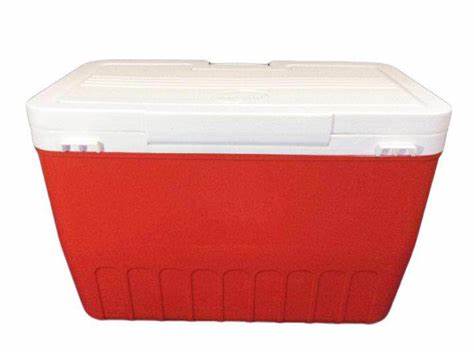
Imagine a business poised to disrupt an entire market, one where a simple product is turned into a game-changer through innovation and strategic foresight. This is exactly what Orocan, a trusted plastic manufacturer, did with their insulated coolers.
It all started with a single observation by their president, Ramon Go.
Ramon Go noticed a glaring gap in the market: imported coolers were not only expensive but also bulky, making them costly to ship and store. While they were popular, particularly for seasonal uses like summer outings, they were simply too expensive for most businesses or individuals to afford.
With this insight, he saw an untapped opportunity. Orocan, known for its affordability and quality in the plastic manufacturing space, could produce insulated coolers of equal or even better quality at a significantly lower price. These coolers, he realized, could serve a wide range of purposes beyond just recreational use. Businesses could utilize them for cold storage, and small entrepreneurs could leverage them for transporting perishables.
Fast forward, and today, Orocan’s insulated coolers are their top-selling product. It is an undeniable success that proves their innovative approach and market insight.
But behind this historical success lies a deeper corporate lesson. When corporate leaders talk about product development, they usually fall into a very predictable trap. They assume innovation means adding complex features. They think they need space-age materials or premium aesthetics just to justify a higher price tag.
We call this the “Premium Design Trap.”
It operates on a flawed corporate assumption: that product development is simply a linear race to the top of the pyramid. Make it shinier. Make it more exclusive.
True market-driving product development does not just design a prettier product. It designs an entirely new market logic. Instead of over-engineering an asset for a tiny sliver of affluent buyers, it strips a premium luxury down to its absolute functional essence to unlock massive, latent, mass-market demand.
The Logistical Mirage: Redefining the Product Problem
The first rule of strategic reasoning is simple: make sure you are solving the correct tension.
When looking at the premium cooler market, most observers made a big mistake. They assumed the high retail price reflected superior raw materials or proprietary manufacturing technologies. That was an operational illusion.
The high cost of imported coolers wasn’t driven by production complexity at all. It was driven by logistical friction.
Coolers are inherently bulky, hollow, and non-stackable. Shipping ocean containers filled with foreign coolers means paying a massive freight premium. You are literally paying to transport trapped air across thousands of miles of ocean.
By the time those imports hit local shelves, what was the consumer actually paying for? Not advanced insulation technology. They were paying for the monumental inefficiencies of international maritime logistics.
The true product development insight was right in front of them. If a local manufacturer could eliminate international freight friction by producing high-performance insulation within domestic borders, they could completely reconfigure the product’s cost structure.
Product development, therefore, became an exercise in strategic cost-migration, shifting capital away from logistical waste and putting it directly into consumer affordability.
The Three-Gate Disruption Engine
To successfully move a product from a conceptual sketch to a market-dominating cash engine, entrepreneurs and product developers must navigate a strict validation sequence from The Four-Gate Model. This is the operational engine that transforms raw ideas into sustainable corporate assets:
- GATE 1: IDEATION (Mapping the Functional Gap)
- GATE 2: DISCOVERY (Stress-Testing Assumptions)
- GATE 3: INCUBATION (Proprietary Value Orchestration)
Gate 1: Ideation (Mapping the Functional Gap)
Product ideation is routinely ruined by corporate teams chasing superficial features. They lose sight of the functional core of the consumer problem.
What does a cooler actually do? At its absolute essence, it is an asset that preserves perishable livelihoods by slowing thermal transfer.
For the broad C and D socio-economic markets in the Philippines, which make up nearly 80% of the population, a cooler isn’t a leisure accessory for a beach weekend. It is a critical piece of operational equipment.
It is what a small beverage vendor uses to keep drinks ice-cold. It is what a fish vendor uses to preserve their morning catch. It is what a micro-catering service uses to transport hot meals safely across the city.
By shifting the product’s design intent from recreation to utility, Orocan completely reframed the target market parameters.
Gate 2: Discovery (The Triple-Threat Validation Matrix)
An idea without disciplined stress-testing is just boardroom noise. During the discovery phase of product development, the concept must be subjected to a rigorous three-layer feasibility audit:
- Desirability (The Trust Test): Will a consumer who associates insulated performance with historic global brands trust a local plastic manufacturer to deliver the same thermal integrity? Orocan leveraged its long-standing reputation for household durability to bridge this psychological gap.
- Feasibility (The Asset-Sweating Test): Can our existing, heavy-duty injection molding machinery and plastic manufacturing plants be reconfigured to execute dual-wall insulation without triggering an astronomical, margin-killing capital expenditure? The answer lay in modular mold engineering.
- Viability (The Unit-Economic Test): Can we maintain a robust, profitable margin structure while retail-pricing the product at a mere fraction of the imported alternatives? By wiping out international maritime freight costs, the economic runway was secure.
Through rapid prototyping, continuous thermal testing, and minimizing “Time-to-Value,” Orocan optimized the product for the rugged local environment. They prioritized thick-walled durability and impact resistance over high-cost, unnecessary design flourishes.
Gate 3: Incubation (Proprietary Value Orchestration)
The ultimate execution failure in product development is the inability to scale. A great product concept will die if it cannot survive its own supply chain.
Orocan didn’t just incubate a new plastic box. They weaponized their massive, pre-existing domestic distribution footprint. The moment the coolers passed thermal quality control, they were funneled directly into thousands of retail slots, supermarkets, and traditional trade stores across the archipelago.
Because manufacturing was completely localized, Orocan turned its warehousing and immediate replenishment loops into an unassailable defensive moat.
An international importer must wait weeks or months for an ocean container to arrive to restock a hot-selling item. Orocan could reconfigure factory floor mixes on the fly via a digital dashboard to match real-time market demand. Today, those insulated coolers stand as Orocan’s number-one selling product line.
The Friction Architecture of De-Premiumization
To successfully execute this style of product development, you must systematically dismantle the friction layers that historically kept the product out of the mass market’s hands:
- Cognitive Friction: The decision to purchase must be effortless. By pricing the coolers at a clear value point, Orocan shifted the purchase from a heavily debated, long-term capital investment into a straightforward, low-risk operational tool.
- Procedural Friction: Distribution must match reality. By ensuring the coolers were available not just in high-end specialty malls but in local hardware stores and neighborhood wholesale hubs, they minimized the customer’s physical effort to find and transport the asset.
- Social Friction (Preserving the Ego): For a long time, buying a cheaper local alternative carried a subtle stigma of compromise. Orocan flipped this script entirely. They delivered clean, vibrant, modern product aesthetics and leaned heavily into witty, self-aware marketing. Choosing Orocan stopped feeling like a budget compromise. It became a socially validated sign of consumer intelligence.
The Strategic Product Audit
Before you approve the next budget allocation for your organization’s product pipeline, sit with your development team and run this cold, contrarian diagnostic:
- The Incompatibility Shield: If this new product succeeds, can a competitor with a deeper pocket neutralize our advantage tomorrow by simply buying the same raw materials or importing a lookalike? Or have we engineered an earned incompatibility into our local workflow architecture?
- The Functional Core: Are we spending 80% of our development budget on the 20% of features that look pretty on a presentation slide but add zero functional value to the customer’s primary pain point?
- The Operational Fit: Does our business model possess the modular orchestration required to scale this product’s distribution instantly, or will scaling this new SKU create an administrative bottleneck that suffocates our current revenue engine?
Market-driving product development is never a game of superficial decoration. It is an exercise in structural engineering. It is the art of looking at a premium category, stripping away the built-in structural inefficiencies of its legacy value chain, and constructing a proprietary system that delivers premium performance at a democratic price point.
Josiah Go, Chiqui Escareal-Go, and Calel Gosingtian are the co-authors of the bestselling book Entrepreneurship: The Four-Gate Model, the #1 entrepreneurship book in the Philippines. Join Mansmith Productcon on July 28, 2026. The event will be streamed live nationwide via Zoom.