

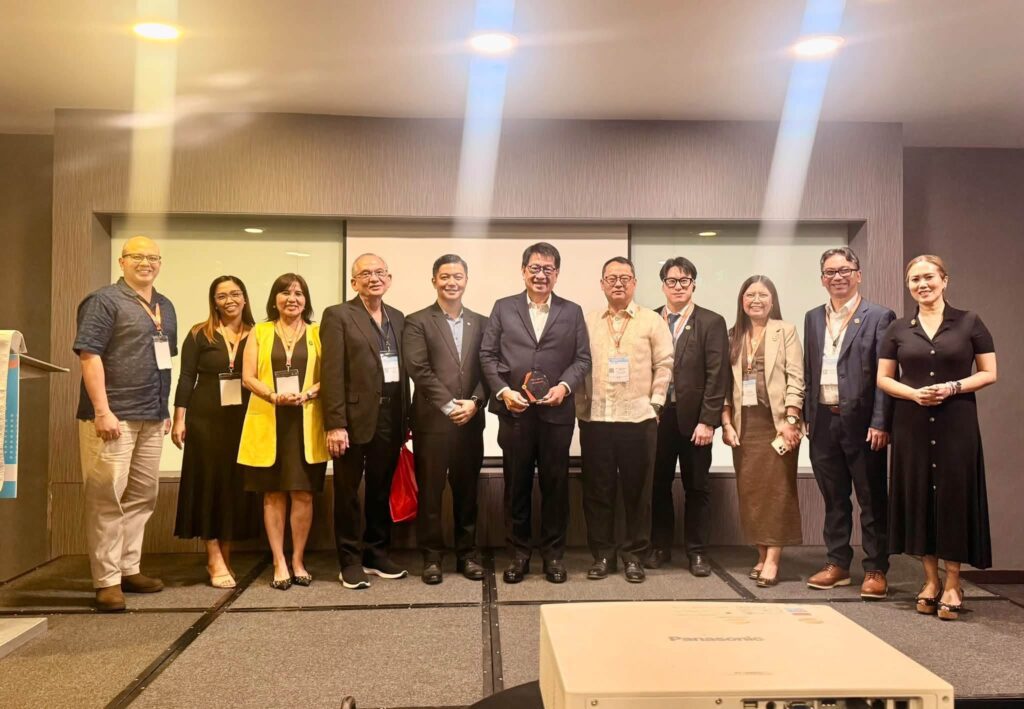
Keynote Speech: Packaging Institute of the Philippines – Annual Exhibit and Industry Forum
October 8, 2026 | SMX Convention Center Manila
Right now, in boardrooms all over the country, packaging owners and CEOs are wrestling with the exact same headache:
“How do we stop clients from squeezing our prices down to zero?”
Good afternoon, friends, and leaders in the Packaging Institute of the Philippines.
Earlier today, Dr. Jocson walked us through practical ways technology helps process waste and meet sustainability targets. And Mr. King showed us how digital tools speed up marketing and build market presence. They gave us an excellent foundation on operational efficiency and customer reach.
But look at what actually happens when everyone in an industry adopts cost-cutting technology:
You buy a system to cut factory costs by 5%. Your competitor buys the exact same system tomorrow and cuts their costs by 5%. Your margin advantage vanishes overnight, and both of you end up with a higher baseline cost of staying in business.
So where does that leave us?
Let’s take back our question to our executive committee and reflect “How do we redesign our business model before a digital platform commoditizes our factory?”
Operational efficiency and marketing speed keep us afloat today. But business model strategy determines whether we still exist five years from now.
Technology is not just a tool to run old operations a little faster or cheaper. It is a lever to rethink how we create value, defend our margins, and lock in accounts.
Redefining The Core Value of Packaging
For decades, everyone in this room grew up on the three traditional functions of packaging:
- Protect the product.
- Preserve the product.
- Promote the product.
In that traditional setup, you manufacture a box or a pouch, ship the order, send the invoice, and wait for the next Purchase Order.
That setup is changing fast. Packaging is moving from a passive physical container into an active layer of trust and traceability.
Let’s be realistic about local market dynamics. Here in the Philippines, where a massive volume of output is in single-serve sachets, corrugated boxes, or low-margin flexible pouches, nobody is putting expensive electronic sensors on every package. The packaging cannot cost more than the item inside.
Yet low-cost print innovations are already redefining value on the factory floor.
Take cold-chain agricultural logistics. Exporters skip expensive gadgets altogether. They print low-cost, heat-sensitive dynamic inks on outer master cartons.
When a shipment arrives at the port, a quick camera scan reads the temperature history instantly. The system alerts the distributor:
“Batch A retained full shelf life: ship it straight to provincial supermarkets. Batch B caught heat exposure in transit: reroute it immediately to a processing plant today.”
The packaging supplier didn’t sell a high-cost electronic device. They printed a simple, smart carton. But because they provided spoilage prevention and risk reduction, they stopped being a 2-centavo commodity vendor and became an indispensable strategic partner.
When you offer that level of visibility, the conversation shifts from “What is your price per piece?” to “How much operational risk are you taking off my plate?”
Three Realistic Business Model Shifts
Looking at manufacturing shifts across regional markets, leading converters are altering their business models in three practical ways:
1. From Transactional POs to Vendor-Managed Inventory (VMI)
We know FMCG brand owners guard their sales data fiercely. They won’t give suppliers access to their internal databases.
Smart packaging leaders work around this by running predictive forecasting tools on their own side. By tracking raw material price trends, seasonal order cycles, and historical buying friction, they spot stock shortages before the client’s procurement manager even opens a purchase requisition.
Instead of waiting for a frantic, last-minute rush order, you present pre-scheduled production slots directly to the client. You move from a vendor getting squeezed on price to an essential supply-chain orchestrator.
2. From Asset-Heavy Factories to Defense Against Digital Middlemen
A tech startup will not spend 50 million pesos to buy machinery and build a plant to compete with you. Your physical plant, equipment, and production capabilities remain a strong moat.
The immediate threat comes from asset-light digital aggregators. These are online software platforms that sit between brand owners and manufacturers, taking orders and routing them to the cheapest available factory floor in Southeast Asia.
If we remain passive manufacturers, these digital middlemen will turn your plants into white-label job shops and squeeze our margins. To defend your accounts, your plants must offer direct digital integration and scheduling so brand owners deal directly with you, not an aggregator.
3. From Waste Compliance Burden to Regulatory Data Services
Under the Philippines’ Extended Producer Responsibility (EPR) Act, brand owners face growing legal pressure and mandatory audits to prove waste recovery.
In response, forward-thinking packaging manufacturers print machine-readable codes and digital watermarks directly onto plastic surfaces. At recovery sites, automated camera sorters track recovery rates effortlessly.
These packaging suppliers aren’t just selling recyclable film; they bundle the recovery metrics and deliver automated EPR compliance reports straight to the brand owner’s legal team.
They turned a regulatory headache into an ongoing, high-margin service.
The Strategy Logic for Packaging Leaders
Before spending capital on new tech or software, run your plans through this abbreviated Strategy Logic Chain:
Step 1: Test Your Foundational Assumptions
Every business strategy rests on assumptions.
- Do you assume clients will always buy purely on the lowest price per pouch?
- Do you assume heavy machinery alone will protect your profit margins?
If digital platforms begin aggregating client orders and squeezing factory fees, relying on machinery alone fails.
Step 2: Audit Your Value Proposition Integrity
Ask your executive team: Are we solving a 2026 problem or a 2016 problem?
- The 2016 problem was: “Can you make a strong box at a cheap price?”
- The 2026 problem is: “Can you help us satisfy EPR compliance, guarantee supply continuity, and protect our brand from fakes?”
If your client’s board worries about regulatory fines and supply chain shocks, but you are still pitching a 2-centavo discount, your value proposition lacks integrity.
Step 3: Build Your Defensible MOAT
If any competitor can buy the same machines and license the same software, technology alone is not a competitive advantage.
Your true competitive advantage, your MOAT, lies in proprietary operational knowledge, deep client workflow integration, and execution speed.
Software can be bought off the shelf. Strategic clarity remains rare.
Software or Strategy
Market leadership has never belonged to the company with the newest gadgets. It belongs to the leadership team with the clearest strategy.
When you head back to your plants and offices tomorrow, skip the tactical question:
“What software should we buy to make our team work faster?”
Gather your leadership team and work through this core strategic question instead:
“If a digital packaging platform entered our market today, using smart routing to connect our clients directly to low-cost overseas plants, how would they try to commoditize our factory? And what data-driven services must we build today so our clients never want to leave us?”
Technology will not replace physical packaging companies.
But packaging companies with a superior business strategy will surely replace packaging companies that only use technology to cut costs.
Let’s stop using new tools merely to optimize old methods. Let’s use clear strategy to shape the future of our industry.
Thank you very much.