

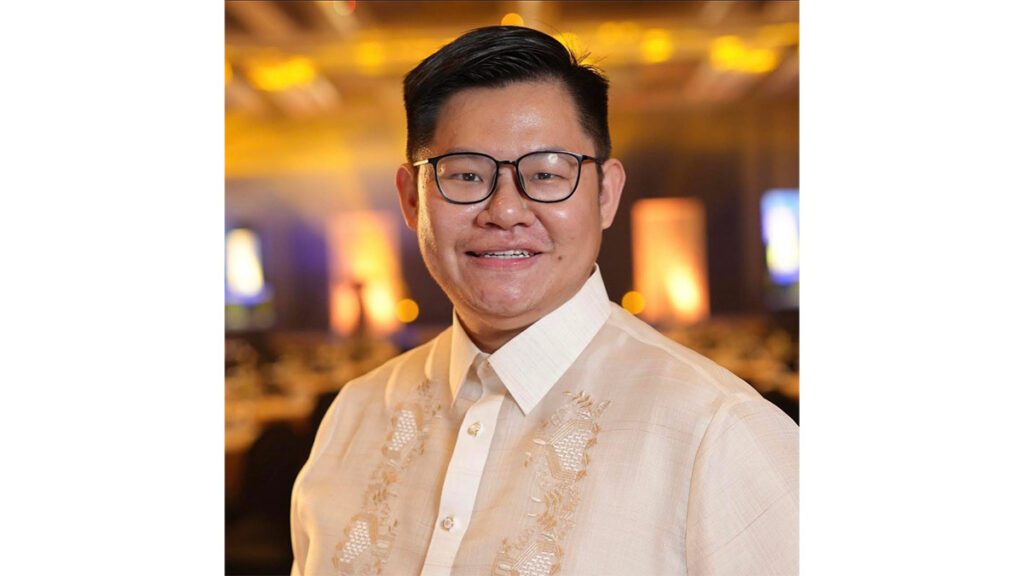
Atty. Kesterson Kua is the founding partner of Kua Sy and Yeung (SKY Law). With deep expertise in commercial and family business law, he has worked closely with many Chinese-Filipino (Chinoy) entrepreneurs. In this interview, he shares insights into the legal, cultural, and generational dynamics that shape Chinoy family businesses, and how governance, foresight, and self-awareness can help preserve both the enterprise and the family behind it.
Q1: Chinoy family businesses are often guided by tradition seniority, deference to elders, and unwritten rules yet they also need formal governance to grow. How do you introduce structure without undermining culture?
A1: Governance only works if the family is emotionally ready for it. In my first meetings, I keep things simple. I remind families of the old Chinese saying 富不过三代 wealth rarely lasts beyond three generations. It remains painfully relevant today: the first generation builds, the second grows, and the third often loses it.
One major reason is the absence of governance. Governance sounds intimidating too corporate or legal but at its core, it is simply about setting clear rules on how the family runs the business.
Who makes decisions?
How are disagreements resolved?
What happens during a deadlock?
Who mediates conflicts?
Answering these questions already forms the foundation of governance. The key is to formalize what families already value respect, harmony, and continuity.
That said, one traditional practice that clearly hinders progress is the automatic preference for males or the eldest child regardless of competence. This creates silent resentment. The conflict may not surface while parents are alive, but it often explodes later, damaging both the business and family relationships.
Q2: Succession is one of the most failure-prone stages in family businesses. What pitfalls do you see most often, and how should next-generation leaders prepare?
A2: The most common pitfall today is an entitled next generation children who feel financially secure simply because they were born into wealth and therefore lack the hunger to grow the business.
This is why a clear mission and vision are critical. More importantly, they must be taught early, long before succession discussions begin. If the next generation does not understand why the business exists beyond money, they will never feel responsible for protecting it.
Another major pitfall is treating the family business as a fallback option for children who fail elsewhere. I often see sons or daughters placed on the payroll without real responsibility. In one case, a son partied until dawn, arrived late to the office, deposited checks, and did nothing else yet he was introduced as being “in charge of finance.” No one questioned him because he was the owner’s son.
Practices like this almost guarantee that wealth will not pass three generations.
Family businesses should never be fallback plans. Instead of absorbing the weakest members, families should prioritize the strongest. I often ask clients: why are your most capable children working for multinational corporations instead of being encouraged to return and lead the family enterprise?
Human capital is one of the most valuable assets any business can have. Giving away your best people even if they are your own children is a costly mistake.
Q3: Many Chinoy entrepreneurs excel in business but operate with informal ownership and loosely defined roles. What blind spots should they watch out for?
A3: One major blind spot is assuming that trust alone is enough.
Many Chinoy families rely on verbal agreements, implied ownership, and undefined roles. This works until it doesn’t. Problems usually arise during transitions such as death, incapacity, marriage, or downturns. When expectations are unclear, trust quickly turns into suspicion.
Another blind spot is failing to distinguish family roles from business roles. Being a sibling, child, or cousin does not automatically qualify someone for management or ownership control.
Proper governance does not make a business rigid. In fact, it allows the business to move faster. Clear decision-making rules, defined roles, and dispute-resolution mechanisms remove uncertainty and friction.
The key is to design governance that is principles-based rather than overly bureaucratic structures that reflect family values like harmony and long-term thinking, while still enforcing accountability and meritocracy.
Q4: With digital assets, tax reforms, and global regulations, how should Chinoy family businesses future-proof their structures?
A4: Families must accept that informality is now a liability.
Future-proofing requires intentional structuring: holding companies, shareholder agreements, family constitutions, trusts where appropriate, and clear estate plans that account for both local and global assets including digital ones.
Families should also regularly review their structures in light of tax reforms, cross-border regulations, and succession laws, especially as younger generations increasingly live, study, or invest abroad.
But beyond technical tools, the most important protection is alignment. Legal structures only work when they reflect a shared family philosophy. Otherwise, documents become meaningless or worse, weapons in family disputes.
The goal is not just asset protection, but relationship protection ensuring that the law supports harmony rather than undermines it.
Q5: What single risk poses the greatest threat to Chinoy family businesses today, and how can families finally break the cycle?
A5: The greatest risk is unresolved family conflict.
This persists because many families avoid difficult conversations, believing silence preserves harmony. In reality, silence only postpones conflict. Issues are buried, not resolved, and resurface at the worst possible time often after the patriarch or matriarch is gone.
To break this cycle, families must talk early, openly, and with structure. In the family constitutions I draft, I always insist on appointing a clear point person to mediate conflicts, even personal ones. Small unresolved issues may seem harmless, but over time they harden into deep-seated grudges that damage both family and business.
Families should not fear conflict. Conflict is natural and often healthy. It shows that family members care deeply but have different views on how to achieve the same goal. The real danger is unresolved conflict.
Families that survive across generations are not those without conflict, but those that learn how to manage it well.
Join the Conversation with 16 CEOs/MDs/Presidents
Explore ideas about trust, opportunity, strategy, and leadership in person at the 17th Mansmith Market Masters Conference on March 17, 2026 in SMX Aura. For more information, visit: www.marketmastersconference.com
***
Josiah Go is a three-time record-breaking, best-selling author of 20 books on marketing and entrepreneurship, all written within the Philippine setting.