


A Discovery in Shanghai
Sometimes, the most meaningful strategic journeys begin with a simple question.
During a visit to the Shanghai Museum, I walked through galleries filled with reminders of China’s extraordinary past: ancient bronze vessels, calligraphy, and artifacts that carried stories from civilizations that rose, flourished, and disappeared thousands of years ago.
Then I saw something that made me stop: a beautifully crafted ceramic chicken-headed pouring vessel from the Kingdom of Wu (229–280 CE).

The name immediately caught my eye: Wu (吳). It was the same Chinese character as my own family name.
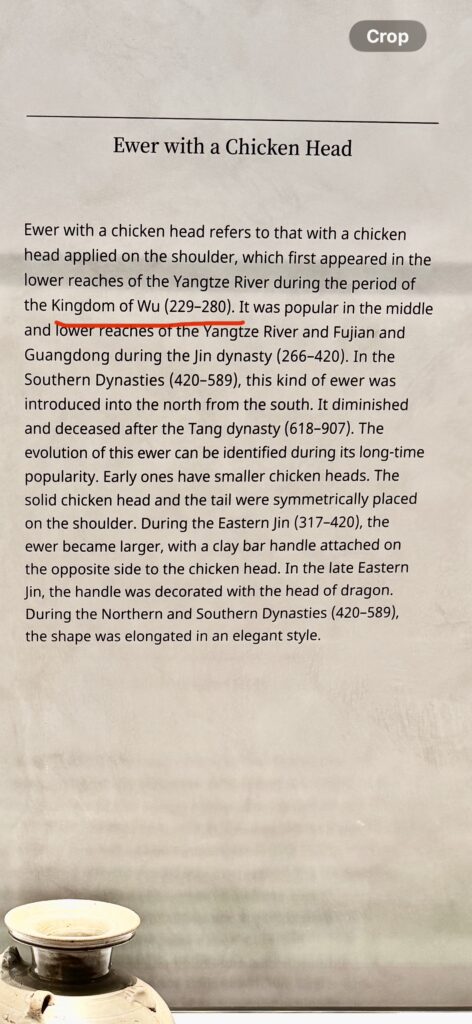
I had always known my surname as Go (which is Wu in Pinyin). Growing up, it was simply my name: a label, an identifier. But seeing Wu not merely as a surname, but as the architecture of an ancient kingdom, opened a door to a much larger story. What began as a moment of curiosity became a deep dive into ancestry, history, and the enduring nature of identity.
More Than a Name: A Strategic Legacy
Every family name carries a story. Some are mere labels; others carry the weight of centuries: stories of migration, resilience, and survival. The Go (吳) name belongs to the latter.
When I write 吳, I am not only writing a surname. I am connecting myself to a history that stretches back more than two thousand years. Like many ancient Chinese surnames, the Wu name possesses deep origin traditions, rooted in an ancient state and defined by two legendary figures who operated on entirely different planes of strategy: Prince Taibo and Sun Tzu.
The Prince Who Chose Ecosystem Over Power
Before Wu was a surname, it was a place. The ancient State of Wu was located in the lower Yangtze River region, a land shaped by water, rivers, and coastlines that naturally fostered craftsmanship, trade, and adaptability.
According to traditional genealogies, the origin of the name begins with Taibo, the eldest prince of the Zhou royal family. Facing a succession dilemma, Taibo recognized that his younger brother Jili possessed the specific qualities needed to lead the royal line forward.
Rather than compete for power and fracture the kingdom, Taibo chose a different path. He stepped aside. He traveled south, embraced local customs, and founded the community that would become Wu.
In The Analects, Confucius praised Taibo as the ultimate archetype of leadership through humility and noble sacrifice. A stone carved with Confucius’s comment can still be seen in today’s Taibo Shrine.
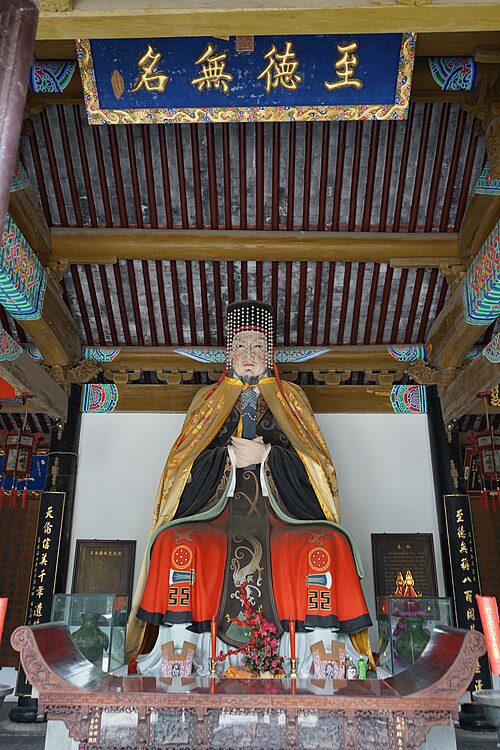
From a modern strategic perspective, Taibo did not simply surrender; he reframed the objective. He moved away from short-term asset accumulation (the throne) toward long-term ecosystem stability. It is a timeless lesson for family businesses and corporate governance alike:
True legacy is not created only by what we capture, but by what we are willing to transition for the greater good.
Sun Tzu and the Strategy of Wisdom
Driven by this foundational adaptability, the State of Wu eventually transformed into one of the most influential powers of the Spring and Autumn period, known for its naval capability, engineering, and highly advanced strategic thinking.
According to Sima Qian’s Records of the Grand Historian, strategist Sun Tzu served the Wu king. It was specifically to the King of Wu that Sun Tzu presented his legendary 13 chapters of The Art of War-the world’s most enduring playbook on strategic thinking, revered across twenty-five centuries not for promoting conflict, but for mastering the supreme art of winning without ever having to fight. Impressed by his theories, the King appointed him as the Chief General of the Wu military forces. Sun Tzu tested, executed, and proved his core strategic principles on the battlefields using the armies of Wu, leading the kingdom to spectacular victories and turning it into a superpower of the Spring and Autumn period.

Sun Tzu’s association with Wu represents a distinct competitive advantage. His teachings shifted the paradigm of conflict away from brute force toward preparation, timing, and asymmetric execution, achieving victory through insight rather than attrition.
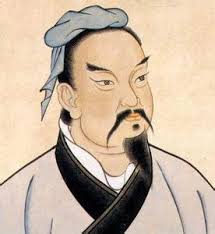
Together, Taibo and Sun Tzu represent the two pillars of the Go (吳) heritage: the moral restraint to build sustainable ecosystems, and the strategic wisdom to navigate complex environments.
How a Kingdom Became a Surname
Even the greatest kingdoms are not permanent. Following a fierce, legendary rivalry with the neighboring State of Yue, the political existence of Wu came to an end in 473 BCE.
Its borders changed, and its rulers disappeared from power. Yet, the identity refused to vanish. Under the tradition of Yǐ guó wéi shì (以國為氏), or taking a state as one’s surname, the people and descendants of that region adopted Wu (吳) to preserve the memory of their homeland.
A dynasty can fall and a city can be rewritten, but a family name can travel. It survived through generations of ordinary people who quietly carried a piece of history across borders.
The Second Wu: A Masterclass in Brand Equity
More than six hundred years after the ancient State of Wu disappeared, the name returned to the center of geopolitical history, providing a fascinating lesson in strategic branding.
During the famous Three Kingdoms period, following the collapse of the Han Dynasty, a new empire emerged in the exact same southeastern heartland: the Kingdom of Eastern Wu (229–280 CE). This was the specific era of the ceramic artifact I encountered in the Shanghai Museum.
Interestingly, this later kingdom was not ruled by the Wu surname; its rulers belonged to the Sun (孫) family, led by the emperor Sun Quan.
Why would a ruler name an entire empire after a family name that wasn’t his own? The answer is prestige and name equity. Sun Quan understood that the “Wu” name carried centuries of deep cultural trust, regional pride, and strategic legacy. By leveraging an established, highly respected historical “brand,” he instantly gained political legitimacy and united the region under a shared identity.
The very ceramic vessel I stood looking at in the museum wasn’t just a container for liquids; it was a physical commodity traded across an empire built entirely on borrowed brand equity.
A dynasty can fall, and centuries can pass, but the equity of a powerful name remains a potent force.
From Wu to Go: The Name That Traveled
As the generations migrated, languages preserved different pronunciations of the exact same character, reflecting a brilliant case study in market adaptation:
| Language / Dialect | Pronunciation |
| Mandarin | Wu |
| Hokkien / Teochew | Go |
| Cantonese | Ng |
| Korean | Oh |
| Vietnamese | Ngo |
The sound shifted. The geography changed. But the character 吳 remained constant. This journey mirrors the larger story of the Chinese diaspora, a masterclass in adapting completely to new local realities while maintaining an unbreakable anchor to one’s foundational roots.
The Lineage of Strategy
It is beautifully poetic. The forefather of my surname (Wu Taibo) was immortalized by Confucius for mastering the art of yielding and organizational harmony. Centuries later, my ancestral kingdom (Wu) hired Sun Tzu to write and execute the ultimate playbook on market-driving asymmetric warfare, “The Art of War.”
It turns out that pioneering the Mansmith Business Model Map, the Trust Economy Flywheel, the PILA stack, and Strategy Logic Chain reasoning architectures, among others, isn’t just my profession, but a literal reactivation of my cultural DNA (Naks!).

The Next Chapter
I began this journey by looking at a ceramic vessel in a museum. I ended it with a profound realization: a family name is a bridge between ancestral decision architecture and future innovation.
Like many Chinese Filipinos, I do not see my Filipino identity and Chinese ancestry as competing forces. They are highly complementary, combining a global perspective and an entrepreneurial heritage with deep local empathy. The Philippines gave me my career, my life, and my purpose, while my ancestry provided the framework to understand them.
We may never know every ancestor who carried the Go name, or the exact details of the risks they managed. But we inherit their equity, their resilience, their capacity to pivot, and their commitment to building trust.
Every generation receives a historical balance sheet, but our job is not just to audit the past. Our job is to create new value. The next chapter has not yet been written. We are the ones entrusted to design it.
